Supply phase, load phase and backup output are separate checks
For a UAE solar equipment enquiry, start with the supply information documented for your site. Then list the equipment you want the system to support, including its phase, voltage and frequency requirements. Finally, state which of those loads must remain powered during an outage.
A building’s supply description is not a complete description of every connected device. Avoid a brief that says only “three-phase site” or “20 kW system.” It leaves unanswered what the selected loads require and what the proposed inverter will supply when the grid is absent.
Write “unknown” and provide the exact equipment model or existing project documentation. Ask your qualified project designer to confirm the supply and selected circuits; do not guess from a plug’s appearance or inspect live electrical equipment.
A shared family name or battery voltage does not settle the AC choice
These two catalogue families provide a concrete starting point. The manufacturer identifies PH1100 PRO as single-phase and PH1100 EU 18–25 kW as three-phase. Both tables list a nominal 48 V battery, despite their different AC descriptions. That battery figure cannot substitute for the phase check or establish compatibility with a particular battery.
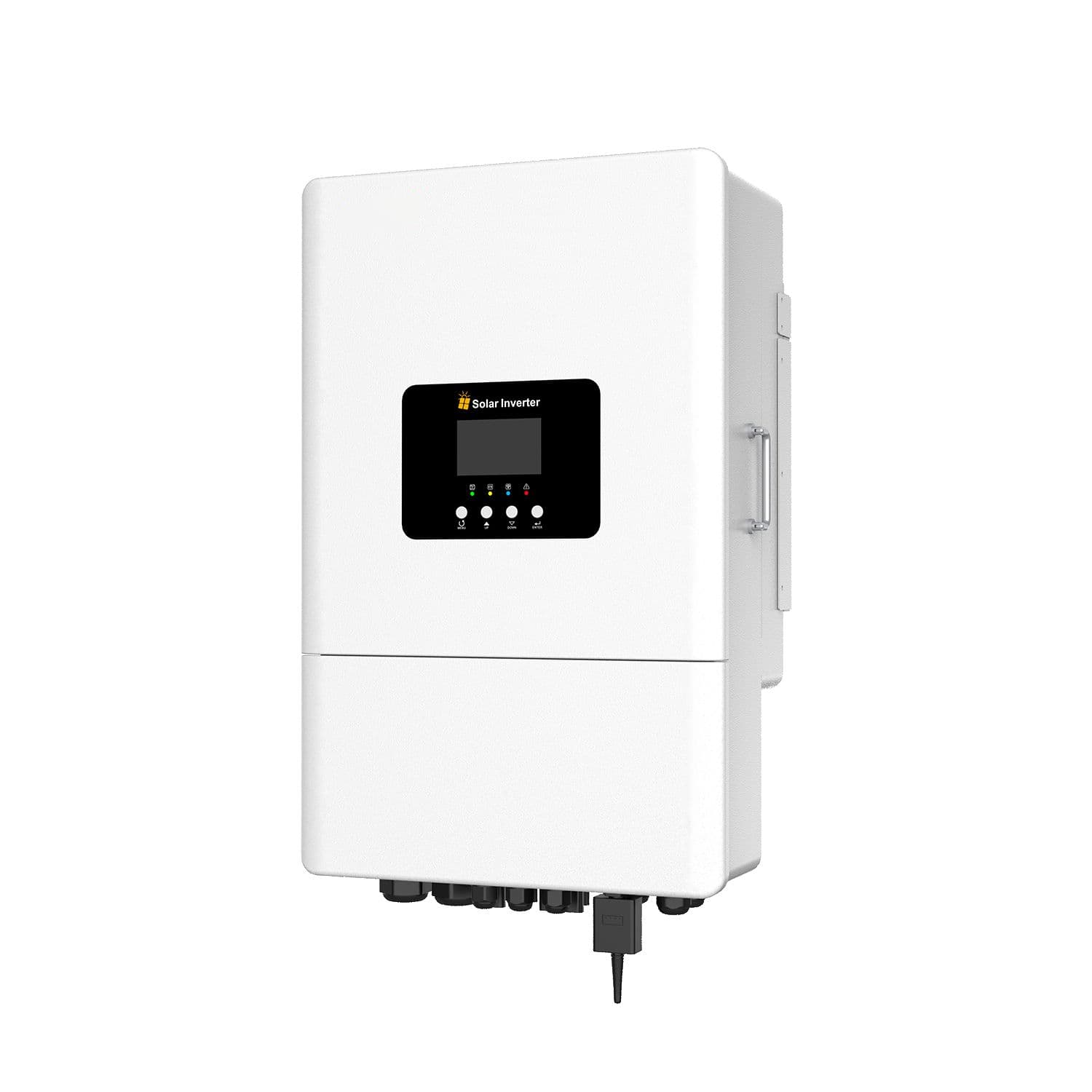
| Documented detail | PH1100 PRO | PH1100 EU 18–25 kW |
|---|---|---|
| AC phase description | Single-phase | Three-phase |
| Exact models | PH11-3648 / 4048 / 5048 / 6048 PRO | PH11-18KL3 / 20KL3 / 25KL3-EU |
| Rated output, in model order | 3,600 / 4,000 / 5,000 / 6,000 W | 18,000 / 20,000 / 25,000 W |
| Nominal battery voltage | 48 V | 48 V |
| AC voltage in the referenced summary table | Not listed; request exact documentation | Grid type: 220/380 V, 230/400 Vac |
The EU voltage row is labelled grid type. It is not a complete specification of the backup output, allowable loading on each phase or motor starting capability. Ask for those details for the exact variant rather than dividing its total watt rating by three and treating the result as an approved load limit.
Primary evidence: PH1100 PRO manufacturer summary and PH1100 EU 18–25 kW manufacturer summary. Confirm the current model documentation before selection.
Grid energy management is not the same question as outage power
Victron’s ESS manual separately describes a single-phase ESS connected to a three-phase utility supply, regulation across phases and a configured three-phase system with AC-out loads. This illustrates why an energy-management description needs to be read alongside the actual output architecture.
Those examples describe Victron equipment. They do not establish MUST settings, interoperability or a suitable Toyama package. For your chosen model, ask which circuits the backup output can supply, what happens when the grid fails and which output or phase limits apply in that mode.
For a pump or compressor, include its exact model and documented starting requirement. A total rated output does not confirm that a specific motor will start. For sensitive equipment, include the permitted interruption and voltage/frequency requirements. Keep an unanswered specification as a question in the enquiry.
Victron ESS manual: multiphase regulation. This article provides buying questions, not wiring instructions, settings or a site electrical design.
A brief that makes the missing details visible
- Site location and documented supply phase, voltage and frequency—or clearly marked unknowns.
- Selected load list: exact models, phase requirements, running ratings and starting requirements where documented.
- Which loads need outage power, their required operating time and permitted interruption.
- Existing inverter and battery models; include the proposed inverter’s full variant code.
- Questions about backup-output phase, voltage, per-phase limits or permitted load imbalance.
- Any existing design or constraints identified by your qualified project team.
Use the solar and storage project planner to organize those details. Its optional electrical section lets you keep unresolved voltage or starting-load questions in the draft. Review the text before choosing to copy it or open a contact draft.
For related checks, read off-grid versus hybrid operating roles and battery energy and compatibility. They answer different parts of the same project brief.
Explore hybrid inverter models →Contact Toyama in Dubai to discuss the documented requirements. This comparison does not confirm availability, a compatible package or permission to connect equipment to the utility.